



















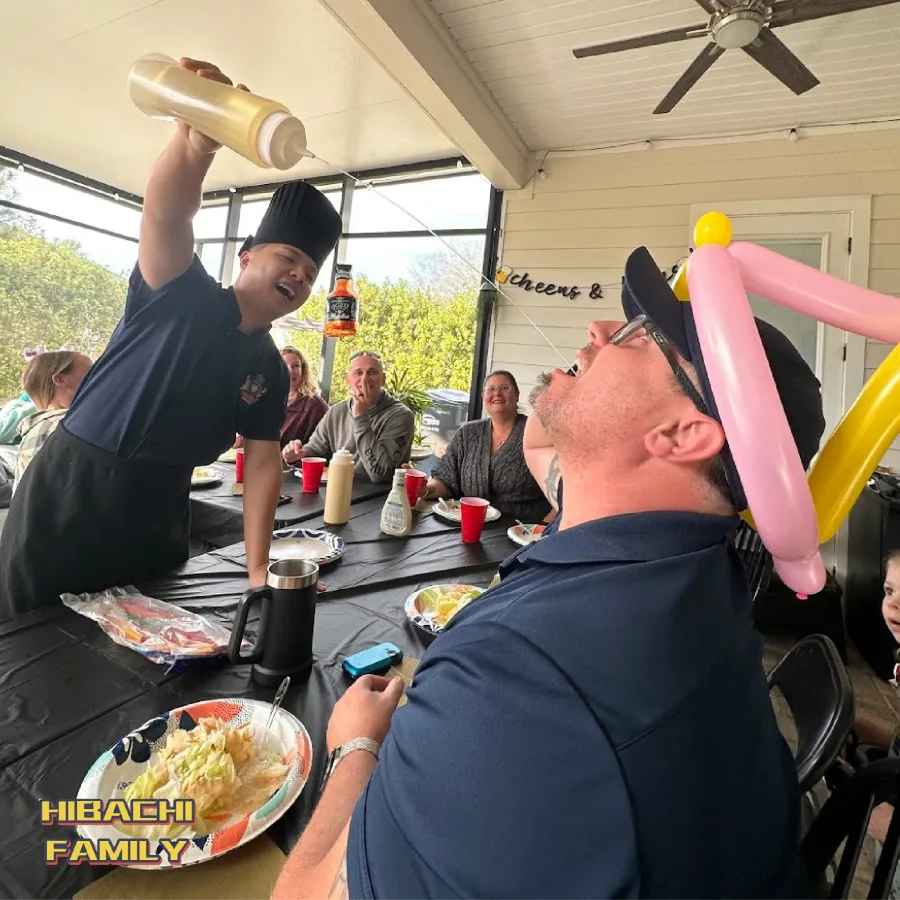
At many “hibachi” restaurants in the U.S., the liquid they squirt into someone’s mouth during the show is often sake—Japanese rice wine—served from a squeeze bottle as a playful trick. In some places, it’s not alcohol at all. It may be sweetened lemon water, a lemonade-like mix, or another house drink used to keep it kid-friendly or easier to drink. The exact liquid depends on the restaurant and the chef.
Why do they do this at hibachi?
What most Americans call “hibachi” is usually a Japanese steakhouse-style experience where the chef cooks right in front of you on a big flat grill. It’s dinner and a show—think the onion volcano, flipping shrimp into hats, tossing egg pieces, and other fun tricks.
The squeeze-bottle “mouth spray” is just one of those optional show moments. It’s meant to get a laugh and keep the energy up at the table. It’s not part of cooking, and it’s not something you’re expected to do.
So what’s actually in the bottle?
There isn’t one single answer everywhere, but here are the most common options guests run into:
1) Sake (most common)
A lot of hibachi places use sake—usually a basic, inexpensive type—because it fits the theme and works well for a quick “shot” moment. If it’s alcohol, it’s typically offered to adults and only if you’re clearly willing.
2) A sweet non-alcoholic mix (common at family-friendly tables)
Some restaurants use a non-alcoholic substitute instead, especially when kids are nearby or the restaurant avoids alcohol tricks. People often describe it as:
- sweet lemon water
- lemonade-like
- lightly sweet and citrusy
This is why one person might swear it was sake, while another says, “No way—that was lemon water.”
3) A house option (varies by restaurant)
Some places have their own version—something that tastes smoother or sweeter than sake. It’s not standardized, so it can change from one restaurant (or chef) to another.
Bottom line: it’s often sake, but it’s not always alcohol.
Is it really “sprayed” into your mouth?
Most of the time, it’s not a mist or spray like a spritzer. It’s more like a quick squirt from a squeeze bottle, and it usually only happens when someone leans in and clearly signals “yes.” If you don’t lean in, it typically doesn’t happen.
Is it safe or hygienic?
In kitchens, squeeze bottles are common tools, and good places keep them clean. But comfort matters. If you don’t like the idea of anything being squirted toward your mouth—especially if you don’t know what it is—it’s totally fine to pass.
You should skip it if you:
- have food allergies or ingredient sensitivities
- don’t drink alcohol
- are cautious about germs or close-contact tricks
- just don’t want it (no reason needed)
Do you have to participate?
Nope—never. This is optional entertainment.
Easy ways to decline:
- smile and shake your head
- lean back
- say “No thanks!”
Most chefs are used to it and won’t make it awkward.
If you’re planning a hibachi-at-home event, you can also tell the chef ahead of time: “No mouth-spray tricks, please,” or “Keep it non-alcoholic.”
How Hibachi Family keeps it guest-friendly
At Hibachi Family, the goal is to bring the fun mobile hibachi experience—great food, high energy, and a memorable show—while keeping guests comfortable. Any audience participation should always be consent-based, and it’s completely normal to skip any trick that doesn’t fit your group.
Learn more at https://hibachifamily.com/.
Quick recap
The liquid they squirt into someone’s mouth at hibachi is usually sake, but in many places it can be sweetened lemon water or another non-alcoholic mix. Since it depends on the restaurant, the simplest move is to ask what’s in the bottle—and remember you can always say no.