





















Hibachi is one of those meals that hits every sense—fresh ingredients, a hot grill, and that savoury, restaurant-style flavour people crave. But if you’re keeping an eye on heart health, managing high cholesterol, or simply trying to eat a little lighter, it’s normal to ask: is hibachi high in cholesterol?
The most accurate answer is this: hibachi can be higher in cholesterol, saturated fat, and sodium—depending on what you order and how it’s prepared. The good news is that hibachi is also one of the easiest “going out” meals to adjust, because it’s built around simple, whole ingredients: protein + vegetables + rice.
Below is a clear breakdown of what impacts cholesterol in hibachi, what items tend to be heavier, and how to enjoy hibachi in a more heart-friendly way—without losing the fun.
What cholesterol in hibachi really comes from
Dietary cholesterol mainly comes from animal-based foods like meat, seafood, and eggs. Many hibachi favourites naturally contain cholesterol—think steak, chicken, shrimp, scallops, and eggs (often in fried rice).
But cholesterol isn’t the only factor that matters. For many people, saturated fat plays a bigger role in raising LDL (“bad”) cholesterol than dietary cholesterol alone. That’s why hibachi sometimes gets labelled as “high cholesterol”—not just because of the protein, but because of the butter, oil, and rich sauces often used to deliver that signature flavour.
So, when people ask whether hibachi is high in cholesterol, what they’re often really asking is:
- How much animal-based protein is in the meal?
- How much butter or cooking oil is used?
- How much sodium is coming from sauces (soy sauce, teriyaki glaze, seasoning blends)?
- How large is the portion (especially rice and noodles)?
Which hibachi choices are typically higher in cholesterol?
Not all hibachi plates are equal. The “heavier” options usually come down to protein type + added fats.
More likely to be higher
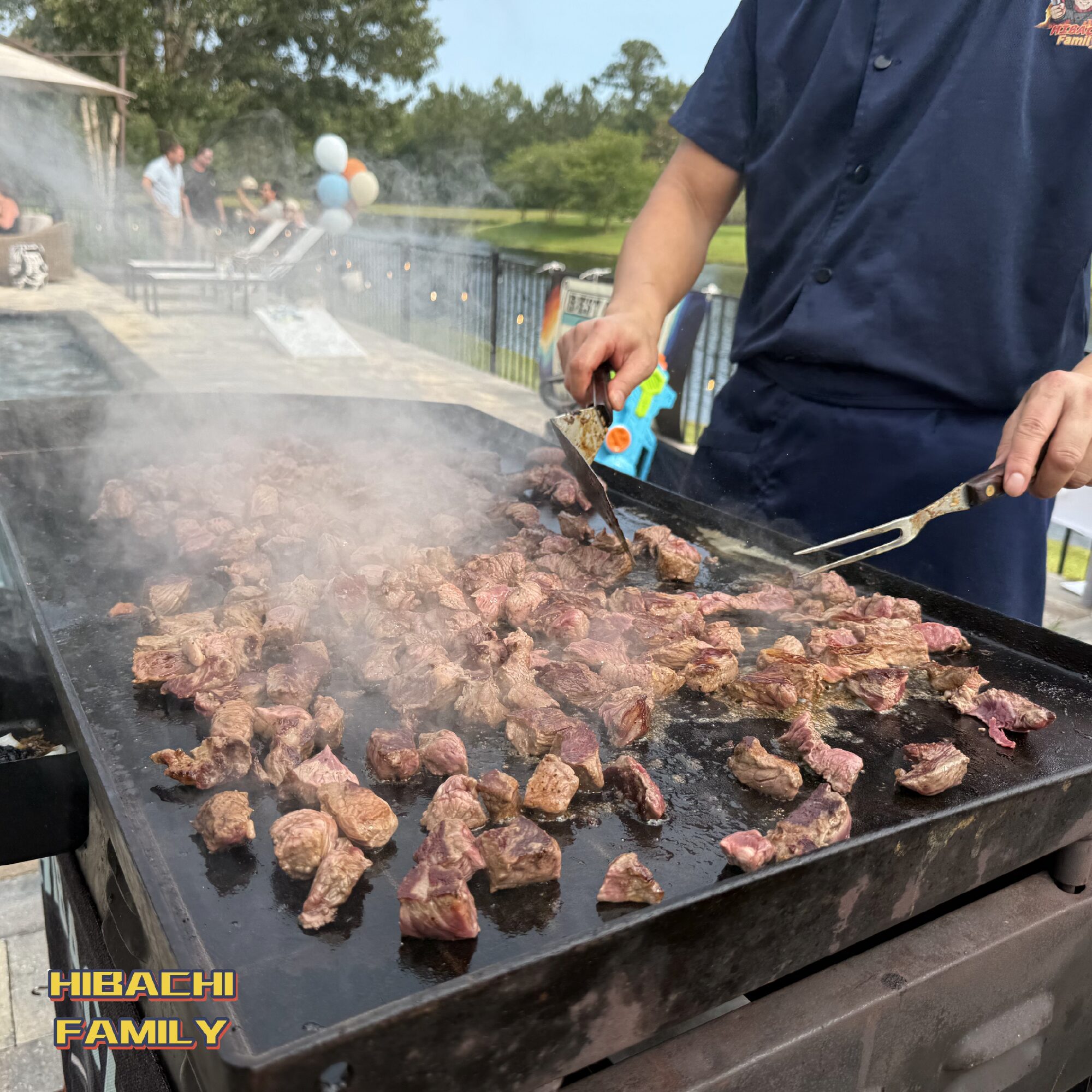
- Steak / filet hibachi: Higher saturated fat depending on the cut, and commonly cooked with butter.
- Shrimp hibachi: Shrimp is naturally higher in dietary cholesterol, even though it’s relatively lean.
- Fried rice with egg: Eggs add dietary cholesterol, and fried rice often carries extra oil and sodium.
- Creamy sauces (like yum yum sauce): Often higher in fat and calories, and easy to overdo.
Often a lighter direction (depending on prep)
- Chicken hibachi: A good middle ground—especially when paired with vegetables and lighter sauce.
- Vegetable hibachi: Lower cholesterol by default, and higher in fibre.
- More veggies, less rice: A simple switch that changes the whole nutrition profile.
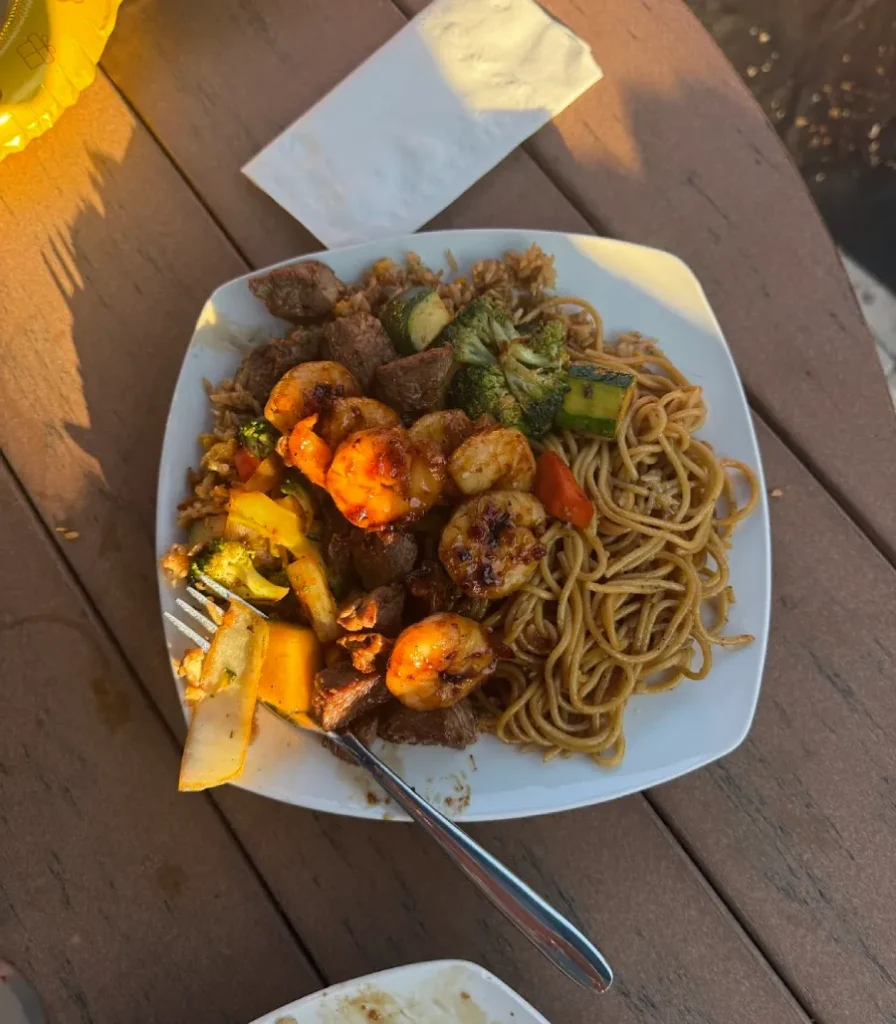
Why hibachi can feel “heavy” (even when the ingredients are simple)
Hibachi is usually cooked hot and fast on a flat-top grill. The flavours people love most often come from a few common add-ons:
- Butter or garlic butter
- Cooking oil
- Soy sauce / teriyaki sauce
- Sweet-and-salty seasonings
- Creamy condiments on the side
None of these are “bad” on their own. The issue is that they can stack up quickly—especially with larger portions, extra sauce, and rice-heavy plates.
How to enjoy hibachi while being mindful of cholesterol
If you’re trying to reduce saturated fat, manage LDL cholesterol, or stay more heart-healthy, you don’t have to avoid hibachi. You just need a smarter balance.
1) Pick a protein that fits your goals
- Go with chicken hibachi if you want a well-rounded option.
- If you love steak, consider a smaller portion paired with extra vegetables.
- If you choose shrimp, balance it by keeping sauces and creamy sides lighter.
Semantic keywords naturally tied to this choice: lean protein, grilled chicken, seafood, steak hibachi, balanced meal.
2) Make vegetables the main event
Hibachi vegetables—like zucchini, onion, mushrooms, broccoli—add volume, crunch, and fibre. Fibre supports healthy cholesterol levels and helps you feel full without relying on refined carbs.
Related terms: hibachi vegetables, fibre, heart-friendly, nutrient-dense.
3) Keep sauces “on the side”
Sauces are where sodium and hidden calories sneak in. Even if you love teriyaki or yum yum sauce, using less can make a noticeable difference.
Related terms: sodium, soy sauce, teriyaki glaze, dipping sauce, portion control.
4) Choose your rice strategy
Rice isn’t the enemy—portion size is the lever.
- Go for a smaller serving of fried rice, or
- Choose steamed rice, or
- Split rice with someone and add extra vegetables instead
Related terms: fried rice, steamed rice, portion size, balanced plate.
5) Balance the full meal, not just one plate
If hibachi is your “bigger meal” of the day, keep the rest of your meals lighter—fruit, vegetables, whole grains, lean protein. Cholesterol management is about overall pattern, not one dinner.

Is at-home hibachi a better option for dietary needs?
Often, yes—because at-home experiences can be more flexible. With at-home hibachi catering, it’s typically easier to accommodate guests who want lighter options, prefer less sauce, or have specific dietary goals.
At Hibachi Family, we bring the full Japanese steakhouse-style experience to your home—while keeping things comfortable for every guest at the table, including those who are mindful of heart health and nutrition preferences.
We cater across Florida, Georgia, South Carolina, North Carolina, and Alabama, making it easy to host a hibachi party that feels exciting, interactive, and tailored to your group.
Final takeaway: is hibachi high in cholesterol?
Hibachi can be high in cholesterol and saturated fat if it leans heavily on steak, shrimp, egg fried rice, butter, and creamy sauces. But hibachi can also be a more balanced, heart-conscious meal when you focus on leaner proteins, more vegetables, lighter sauce portions, and smarter sides.
If you’re planning a celebration and want food that’s unforgettable and easy to tailor for different preferences, Hibachi Family makes it simple. Learn more at https://hibachifamily.com/ and bring the hibachi-at-home experience to your next event in FL, GA, SC, NC, or AL.